


If you’re still working out size and lid type, start with our main guide on how to choose a gym water bottle.
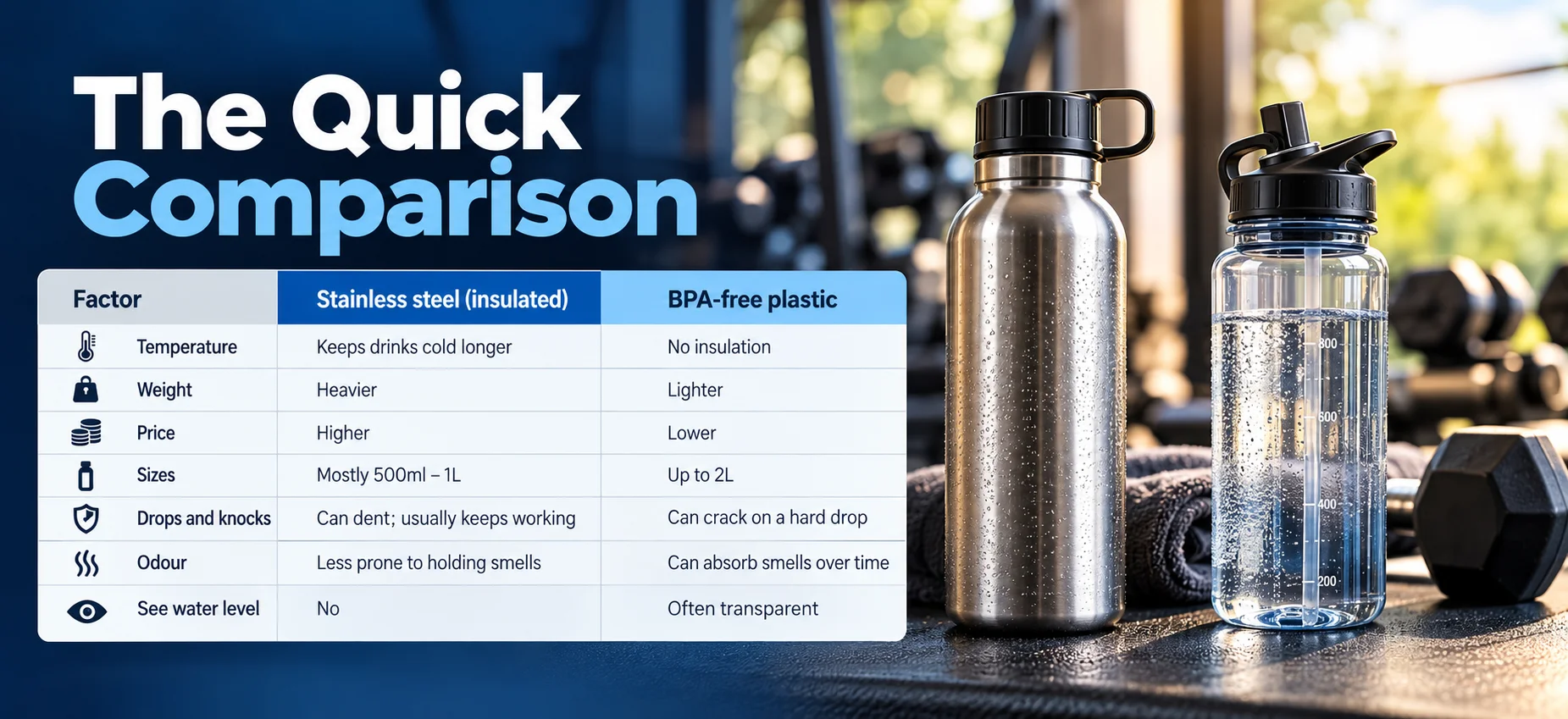
The Quick Comparison
Factor | Stainless steel (insulated) | BPA-free plastic |
|---|---|---|
Temperature | Double-wall insulation helps keep drinks cold | No insulation |
Weight | Heavier | Lighter |
Price | Higher | Lower |
Sizes | Mostly 500ml–1L | Up to 2L |
Drops and knocks | Can dent; usually keeps working | Can crack on a hard drop |
Odour | Less prone to holding smells | Can absorb smells over time |
See water level | No | Often transparent |
Swipe to see more ->
Temperature: The Biggest Difference
Insulated steel bottles have two walls with a vacuum between them. This slows heat transfer, so cold water stays cold for longer than it would in a single-wall bottle.
Why this matters for gym-goers in Pakistan:
Many local gyms have limited cooling, and outdoor training in summer is hot.
Water that warms up mid-session is less pleasant to drink, and you may end up drinking less.
Things to know:
Insulation only works on double-wall bottles. A single-wall steel bottle won’t keep water cold.
The lid matters too. An insulated body with a poorly sealed lid loses much of the benefit.
How long water stays cold varies by bottle, starting temperature and conditions. Check each product’s description rather than relying on general claims.
If temperature doesn’t matter to you, for example in an air-conditioned gym, this advantage of steel matters much less.
Weight and Portability
Steel bottles are noticeably heavier than plastic bottles of the same size, both empty and full.
Plastic suits you if you walk to the gym, use a small bag, or want the lightest setup.
Steel is fine if you drive or ride to the gym and the bottle mostly sits on a bench.
For very large sizes (1.5–2 litres), plastic is usually the practical choice, because a full steel bottle of that size gets heavy.
Durability
Steel handles drops on a gym floor differently from plastic. It may dent, but it usually keeps holding water. Painted or coated finishes can chip over time.
Plastic is light and won’t dent, but it can crack after a hard drop, and it scratches more easily with daily use. Replace a plastic bottle if it cracks or gets deeply scratched.
Either material lasts a long time with sensible handling. The lid is often the first part to wear out, so a good seal matters regardless of material.
304 vs 316 Stainless Steel
You’ll often see “304” or “316” on steel bottles. Both are food-grade stainless steel commonly used for drinkware.
304 stainless steel is the most common grade for water bottles.
316 stainless steel contains molybdenum, which gives it higher corrosion resistance. It’s often marketed as a premium or “medical-grade” option.
For carrying water to the gym, both are suitable. 316 is a premium choice, not a requirement. Make sure the grade is stated on the product page if it matters to you.
What “BPA-Free” Means
BPA (bisphenol A) is a chemical that was once common in some hard plastics. A BPA-free bottle is made without it. That’s why BPA-free labelling has become standard for reusable plastic water bottles.
When buying plastic:
Look for a clear BPA-free mention on the product page.
Don’t leave the bottle in direct sunlight or a hot car for long periods.
Replace it if it cracks, warps or develops a lasting smell.
Steel bottles often have plastic lids and seals, so it’s worth checking that those parts are BPA-free too.
Cleaning and Smell
Gym bottles get dirty faster than office bottles: sweaty hands, gym floors and sometimes drinks other than water.
Steel
Is less likely to hold onto smells.
Usually needs a bottle brush, because you can’t see inside.
Most insulated steel bottles should be hand-washed. Check the product instructions before using a dishwasher.
Plastic
Can absorb smells over time, especially if drinks other than water are left inside.
Is often transparent, so you can see when it needs cleaning.
For both:
Rinse after every session.
Let the bottle dry completely with the lid off.
Clean straws and lid seals regularly, because that’s where residue builds up.
Price
Plastic is the budget option. Insulated steel costs more because of its double-wall construction. On Sahoolat, BPA-free gym bottles start from around PKR 750, and insulated steel options cost more. Prices change, so check current prices in our gym water bottles section.
Which One Should You Choose?
Choose insulated stainless steel if:
you train outdoors or in a gym without good cooling
cold water during your session matters to you
you want a bottle that resists smells
500ml–1L is enough for your workout
Choose BPA-free plastic if:
you train indoors in a cooled gym
you want the lightest, most affordable option
you need a large 1.5–2 litre bottle
you like seeing how much water is left
Some regular gym-goers own both: a light plastic bottle for quick indoor sessions and an insulated steel one for summer or outdoor training.
Compare both types in one place: browse our stainless steel water bottles, BPA-free water bottles or the full gym water bottles collection.
Featured products
Products worth a closer look

Need help choosing the right product?
Tell us your budget and requirements. We'll recommend the best options for you.
Featured products


