


Most gym advice about water talks about the whole day. That leaves the actual question unanswered. How much should you drink during the session itself, from the moment you walk in to the moment you leave? The answer changes with session length, how hard you train, and whether your gym has air conditioning or turns into an oven in a Pakistani summer. This guide works through it one session at a time, using the gym water bottles sold on Sahoolat as working examples.
The short answer by session length
If you only want the numbers, here they are. They follow the American College of Sports Medicine position stand on exercise and fluid replacement, which remains the standard reference that most training guides build on.
Under 30 minutes at moderate effort. A few sips between exercises are usually enough. Most people arrive reasonably hydrated and lose little in half an hour.
30 to 60 minutes. Around 150 to 250 ml every 15 to 20 minutes. That works out to roughly 450 to 600 ml across a typical one hour session.
60 to 90 minutes. Around 400 to 800 ml per hour, taken as 150 to 250 ml every 15 to 20 minutes. In heat, aim for the upper end of that range.
Over 90 minutes, or two sessions in a day. Plan against your own measured sweat rate and add salt to what you drink. Plain water alone stops being enough at this point.
These are starting points, not prescriptions. Two people doing the same session can sweat at very different rates, sometimes three times apart. The sweat-rate test further down this page gives you your own number.
Before the session
Arriving hydrated matters more than anything you drink mid-workout. The American College of Sports Medicine recommends 400 to 600 ml of water in the 2 to 3 hours before exercise. A practical version of that is two glasses with your pre-workout meal, then another 200 to 300 ml in the last 20 to 30 minutes before you start.
If you train at 6 in the morning, keep it simple. A glass of water when you wake up, then small sips on the way to the gym, does the job. Nobody needs to force down a litre before sunrise.
During the session
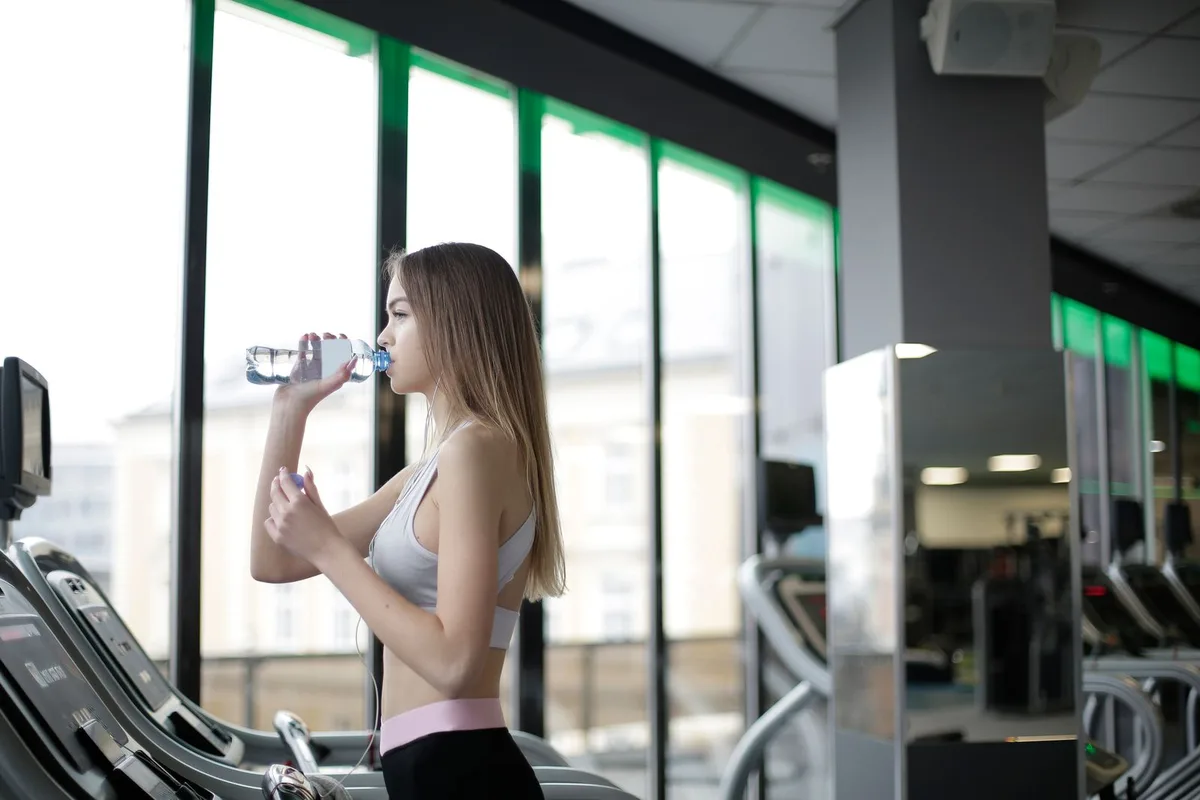
The goal during exercise is to keep fluid loss under 2 percent of your body weight. For a 70 kg person, that is 1.4 kg. Once losses pass that point, endurance, concentration and heat tolerance start to fall in a way you can actually feel.
A 45 minute strength session
Most weight sessions run 45 to 75 minutes, with rest periods of 90 to 180 seconds between sets. In an air-conditioned gym, most people lose somewhere between 300 and 600 ml over 45 minutes of lifting. Small sips between sets cover it. A 500 ml bottle is usually enough for the session itself, and you can refill it on the way out if you want more.
A 60 to 90 minute session
This is where a plan starts to matter. Sip 150 to 250 ml every 15 to 20 minutes rather than waiting until you feel thirsty. Thirst lags behind actual fluid loss, especially in heat, so by the time you feel thirsty you are already behind. A 750 ml to 1 litre bottle suits this length well. Sahoolat's gym range runs from 400 ml to 2 litres, so a 1 litre insulated steel bottle covers most sessions in this band without a refill. If you are still choosing between materials, our Tritan vs stainless steel comparison walks through the trade-offs.
A session over 90 minutes
Long sessions, outdoor training in summer, and high-intensity interval work all push sweat loss up sharply. Sweat rates during exercise typically run from 0.5 to 2 litres per hour, and can pass 2.5 litres per hour in hot and humid conditions at high intensity. At this length, drink 400 to 800 ml per hour and add sodium. A sports drink works here, or water with a pinch of salt and a little carbohydrate. Plain water alone replaces the fluid but not the salt you are losing.
Pakistan summer changes the maths
Standard hydration guidelines mostly assume a temperate gym. Pakistan, for a solid chunk of the year, does not fit that assumption. Karachi, Lahore and Multan regularly cross 40 degrees through the summer months, sometimes touching 45 to 48 in parts of Sindh and Punjab. Many gyms here run with limited air conditioning, or none at all in the early morning and late evening rush.
In that heat, treat the numbers above as a floor, not a ceiling. Drink at the upper end of each range, pre-hydrate properly, and keep your bottle within reach between sets instead of leaving it in your bag. A bottle that keeps water cold gets finished far more consistently than one where the water turns lukewarm within the hour, which is one real reason an insulated steel bottle earns its place in a summer gym bag.
If you train outdoors or in a gym without cooling, the sweat-rate test below becomes genuinely useful rather than just interesting.
Find your own sweat rate in one session
Guides give averages. A bathroom scale gives your number. Do this once on a normal training day.
Weigh yourself before the session, after using the bathroom, in light clothing. Train as usual and note exactly how much you drink during the session. Weigh yourself again straight after, in the same clothing. Work out the loss. Weight before, minus weight after, plus fluid drunk, equals sweat loss. So if you start at 82.0 kg, finish at 81.2 kg and drank half a litre, you lost 0.8 plus 0.5, which is 1.3 litres.
Repeat it once in summer heat and once in cooler weather. Your rate in June will not match your rate in January, and knowing both means you stop guessing all year.
After the session
Replacing what you lost takes more than a one-for-one drink. The American College of Sports Medicine advises replacing roughly 1.5 litres of fluid for every kilogram lost, spread over the next few hours. The extra half covers the urine you pass while rehydrating. If you train again soon, aim for 1.25 to 1.5 litres per kilogram of deficit. If your next session is tomorrow, water with meals across the rest of the day does the job.
For sessions under an hour at moderate intensity, plain water is enough after training too. For longer or hotter sessions, include some salt and food with your post-workout drink rather than water alone.
Which bottle size fits your session
Bottle size is really a session-length decision. A bottle that runs dry halfway through a long session is as useless as one so heavy you leave it at home.
Under 60 minutes. A 400 ml to 500 ml bottle is enough. The 400 ml BPA-free insulated bottle at PKR 750 is the lightest option in Sahoolat's gym range, and a 500 ml steel flask covers the same sessions with hot and cold insulation.
60 to 90 minutes. A 750 ml to 1 litre bottle. The 800 ml double-wall insulated steel bottle at PKR 1,499 and the 1000 ml vacuum insulated steel bottle at PKR 2,400 both sit in this band, with a carry strap on the 1000 ml bottle.
Over 90 minutes, or summer outdoor training. A 1 litre bottle plus a refill, or the 2 litre motivational bottle at PKR 1,950 with time markers that keep your sipping on pace through a long session.
Whatever the size, it needs to fit where it actually lives during training. Check that it sits in your gym bag side pocket and your treadmill holder before you buy, since a bottle that does not fit gets left behind. The full gym range is laid out by size and material so you can compare before choosing.
When water alone is not enough
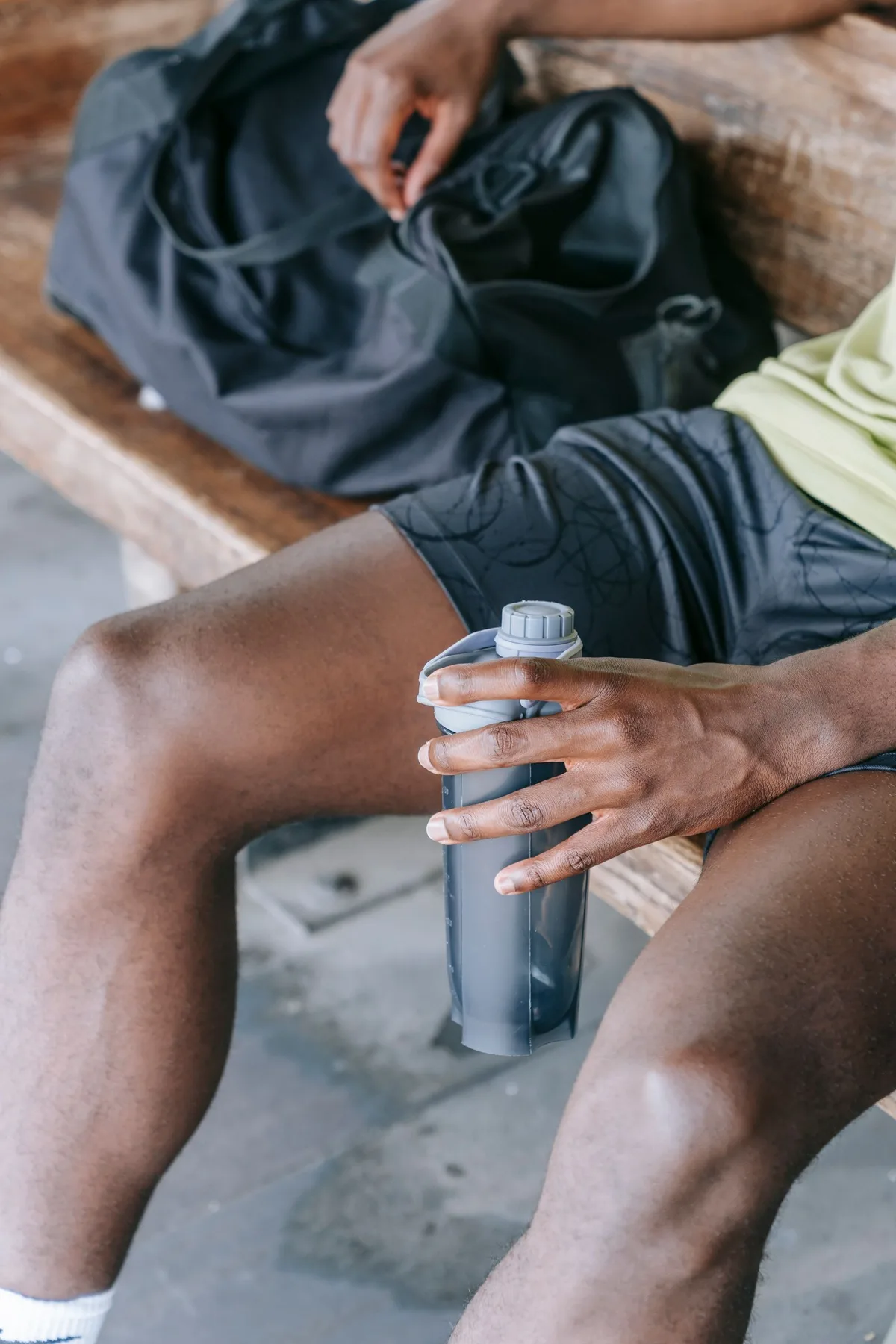
Plain water covers most gym sessions. It stops being enough when the session is long, hot, or both. The signs are practical. Sessions over 60 to 90 minutes of continuous work, heavy sweating that soaks your shirt through, training in heat without air conditioning, and two sessions in one day all point the same way. In those cases, add sodium and some carbohydrate to what you drink. A standard sports drink mix is roughly 6 to 8 grams of carbohydrate per 100 ml plus sodium, which works out to about 30 to 60 grams of carbohydrate per hour for longer work.
One warning is worth keeping. Drinking far past your sweat loss in very long sessions can dilute blood sodium, a condition called exercise-associated hyponatraemia. It is uncommon, but it is real, and it is another reason to drink to a plan based on your own sweat rate rather than forcing down as much as possible.
Frequently asked questions
How much water should I drink during a 1 hour workout?
Around 600 ml to 1 litre in total, taken as 150 to 250 ml every 15 to 20 minutes. In an air-conditioned gym at moderate effort, the lower end is fine. In summer heat, aim higher.
Should I drink water during a workout or only before and after?
During, in small regular sips. Waiting until after the session means training through a fluid deficit you could have avoided. Small sips between sets beat large gulps, which can leave your stomach feeling full mid-set.
Is it bad to drink too much water during a workout?
Drinking well past what you sweat out can dilute blood sodium in very long sessions. For a normal session under an hour, that is not a realistic concern. Drink to thirst and to the ranges above, and use the sweat-rate test if you train long or in heat.
Do I need electrolytes for a normal gym session?
Not for sessions under 60 minutes at moderate intensity. Water is enough. Electrolytes earn their place beyond 60 to 90 minutes, in heat, or with two sessions a day.
Does cold water hydrate better than room temperature water?
Not in any meaningful way for hydration itself. Cold water is simply more pleasant to drink during training, so people finish more of it. An insulated bottle that keeps water cold through the session helps you actually drink the amount you planned.
Bottom line
A gym session is not a daily total. It is a short window with its own numbers. Arrive with 400 to 600 ml already drunk in the hours before, sip 150 to 250 ml every 15 to 20 minutes while you train, and replace about 1.5 litres for every kilogram you lose afterwards. Learn your own sweat rate once, adjust it for summer, and pick a bottle size that matches your session length. That covers the session itself. For the rest of the day, the daily intake guide explains how the training hour fits into your total, and the full water bottle collection covers every size and material in one place.
This article gives general information, not medical advice. If you have a health condition or take medication that affects fluid or salt balance, talk to a doctor before changing how you train or drink.
Need help choosing the right product?
Tell us your budget and requirements. We'll recommend the best options for you.


